Information on syphilis
Syphilis is a preventable and curable bacterial infection that can be passed through:
- Sex without condoms (including vaginal, anal, oral)
- Sharing sex toys
- Kissing (if sores are present)
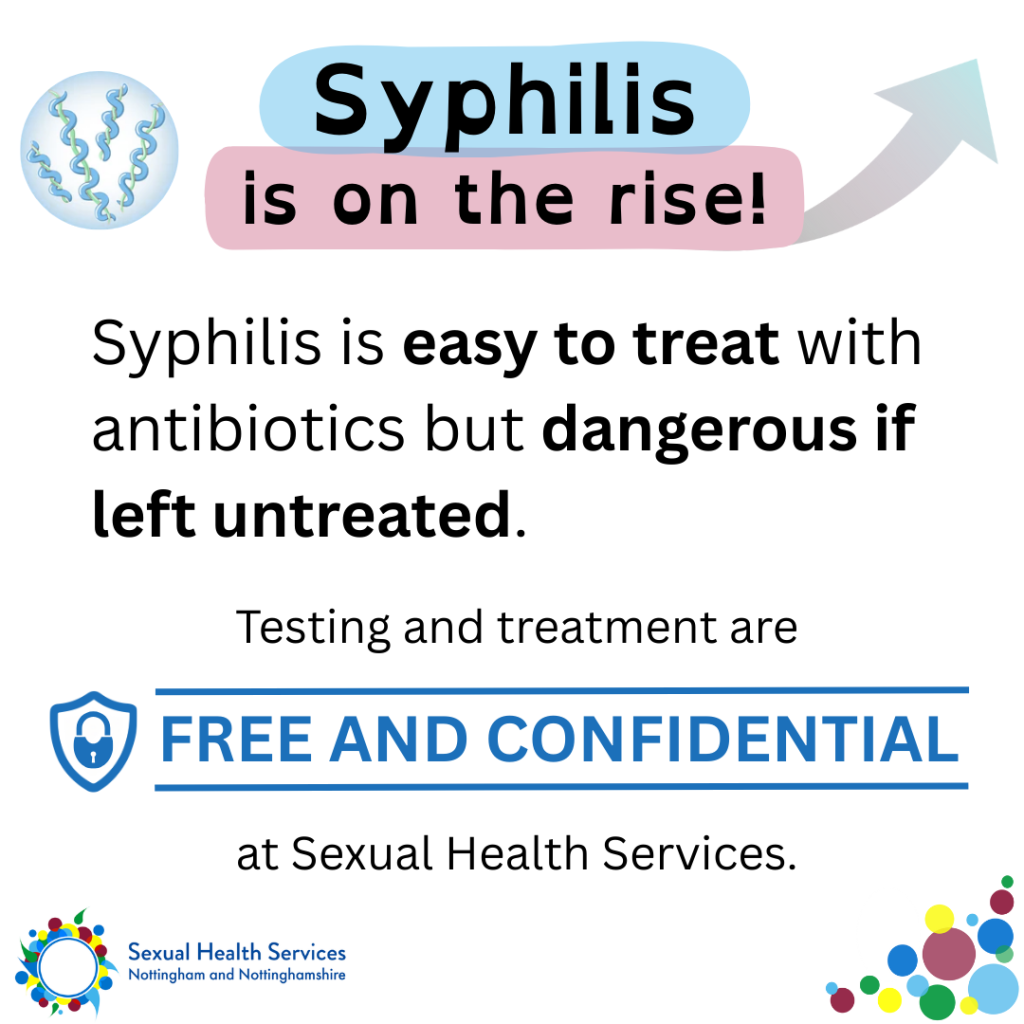
It’s important to understand more about syphilis as it is easy to treat with antibiotics but can be very dangerous if left untreated – it can cause:
- Vision and hearing loss
- Heart disease
- Strokes
- Dementia
- Nerve damage
- Joint pain
- Organ damage
It’s especially important to get treated if pregnant, as it can be passed to the baby and cause serious problems including miscarriage and birth defects.
Symptoms
Many people don’t know they have syphilis, as symptoms can be mild and difficult to spot. They may come and go or sometimes not appear at all, but you can still pass syphilis on even if you don’t have symptoms. Regular testing is important, especially if you are having sex (including oral sex) with multiple people, particularly without condoms.
Symptoms can include:
- Sores (ulcers) – on genitals, mouth, or anus
- Rash – often on hands or feet
- Wart-like growths – typically white or grey and on genitals or anus
- White patches inside the mouth
Testing & Treatment
Testing and treatment are free and confidential at sexual health services. You do not need a GP, or to give your real name, address, or immigration status.
Syphilis is tested with a blood test or a swab from a sore, and it can be cured with antibiotics (usually one injection or short course of tablets).
You can still pass it on for 2 weeks after treatment, so avoid sex during that time if possible.
You can get syphilis again after treatment if you’re exposed again.
Prevention
You can protect yourself by:
- Using condoms for vaginal/ anal sex
- Using condoms or dental dams for oral sex
- Avoiding kissing when sores are present
- Not sharing sex toys
Doxycycline tablets taken 24-72 hours after sex (DoxyPEP) can also reduce the risk of syphilis. DoxyPEP is available from Sexual Health Services Nottingham and Nottinghamshire for some people at high risk – call 0300 131 7010.
Regular testing, safe sex, and early treatment protect your health and others.